InvoiceCraft : invoicing that gets freelancers paid faster
Designed a complete billing product and its design system from scratch using AI to go from rough concept to a shippable system in three weeks.

The problem, in numbers
71%
freelancers have chased a stalled payment (Freelancers Union)
8.5 hr
spent chasing late invoices every month (Jobbers.io)
$6,000
average owed to freelancers with unpaid invoices (Freelancers Union)
An invoice is a state machine - draft, sent, overdue, paid with money and trust on the line at every transition. The same problem sits under payments, transactions, subscriptions, and order status in any fintech or SaaS product. This project is that problem, solved end to end.
PROBLEM
Getting paid isn't a filing task. It's cash flow.
Freelancers don't need a prettier invoice, they need the money to arrive. Existing tools stop at "send"; the hard part, the chase, is left to the user. I designed for the moment after send.
APPROACH
AI to move fast where speed helps; craft where it counts.
Explore fast in Lovable to pressure-test flows, systematise the validated flows in Figma as tokens and atomic components, then build AI into the product (reminder tones, template editing). AI didn't design the system, it bought back the time to design it properly
Lovable Mock Up -> High Fidelity in Figma
THE STATUS SYSTEM
The invoice lifecycle is the product.
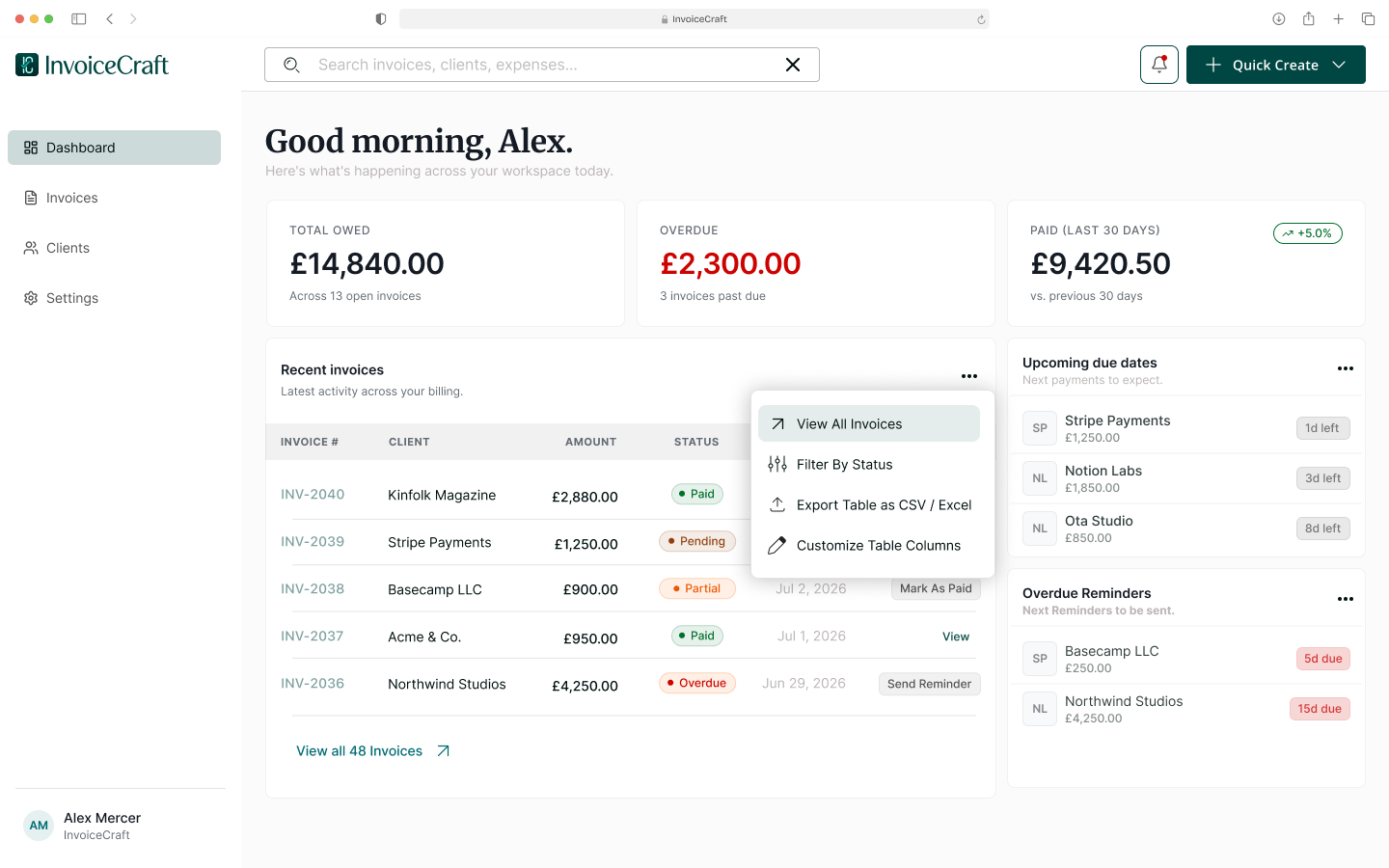
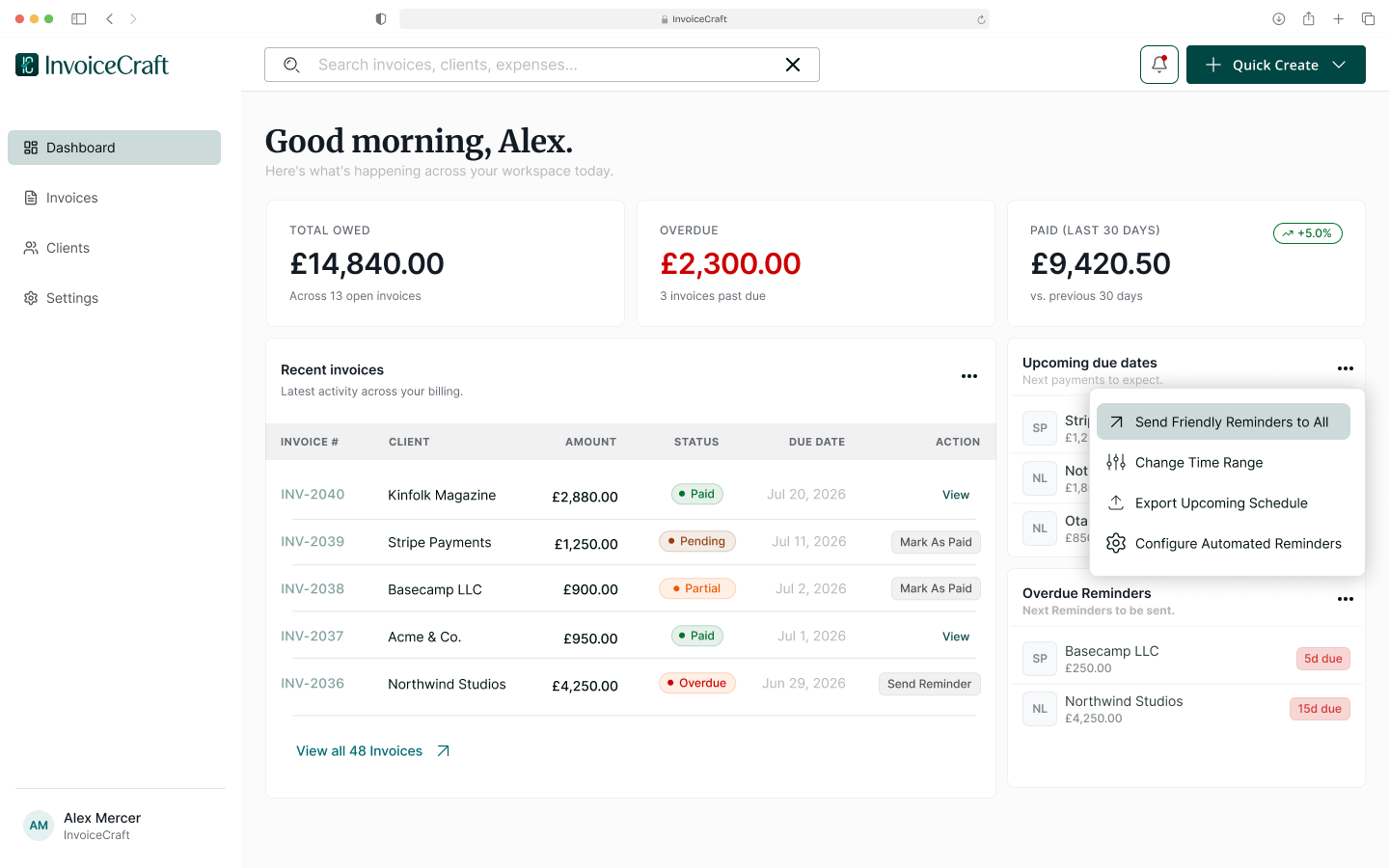
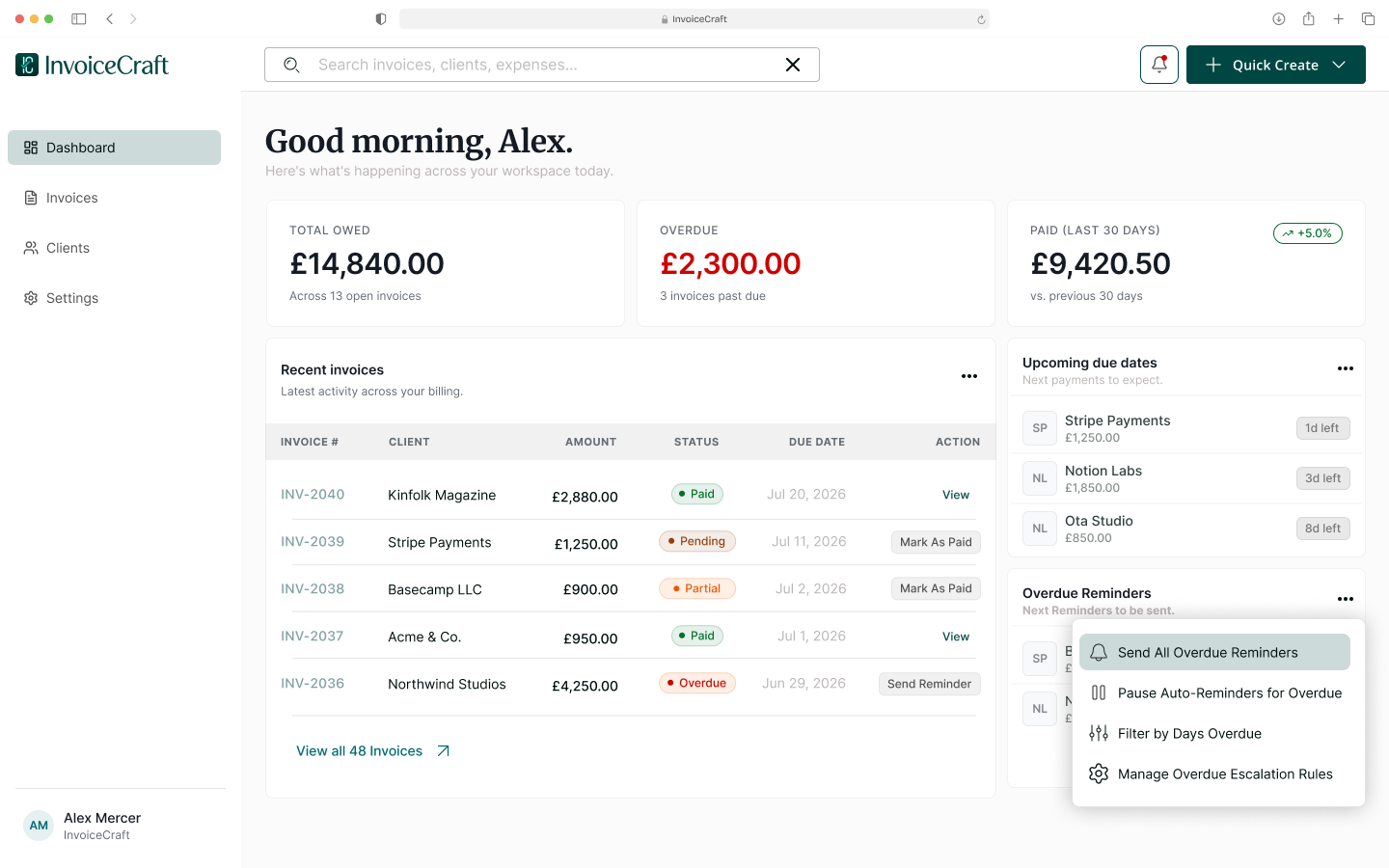
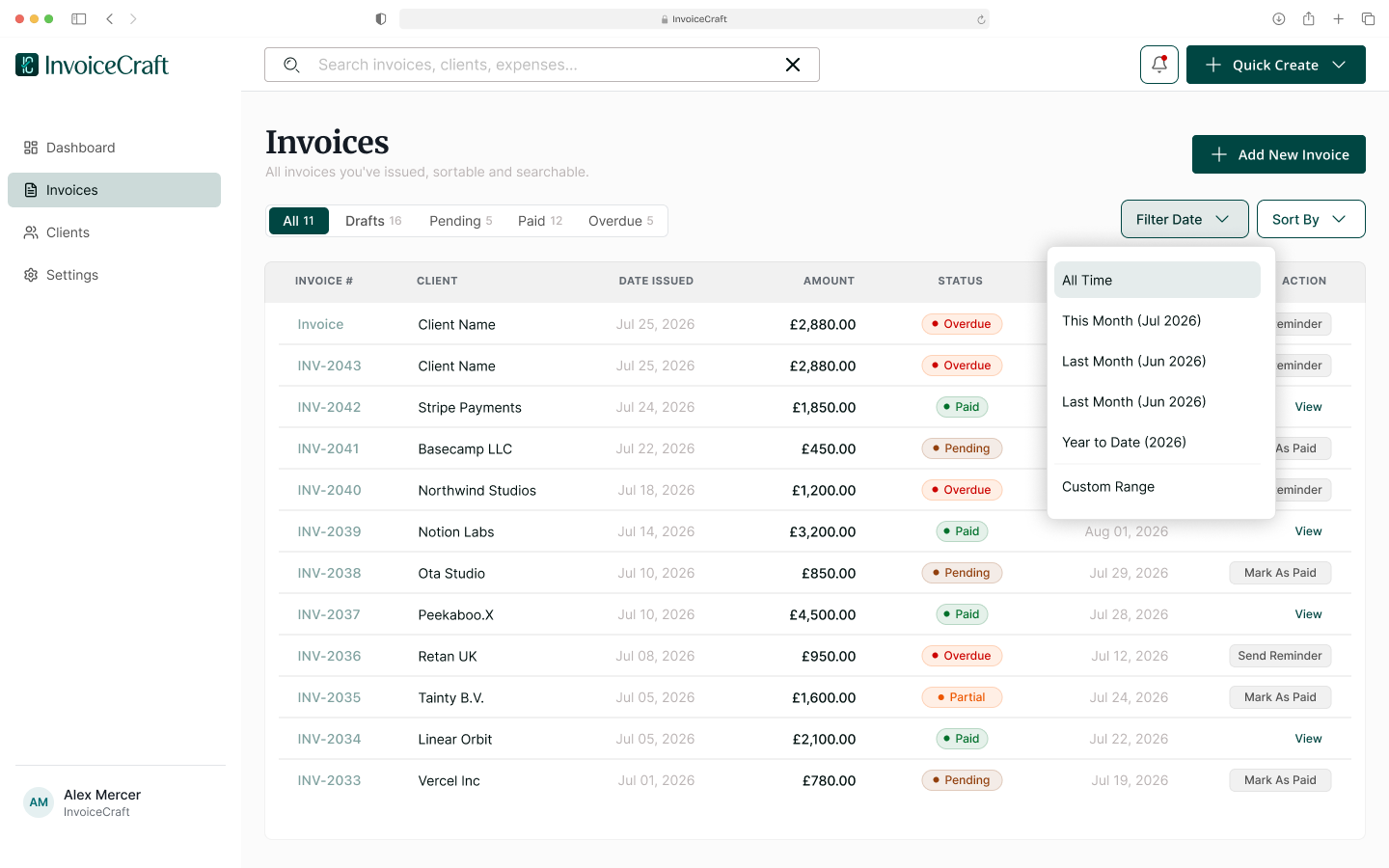
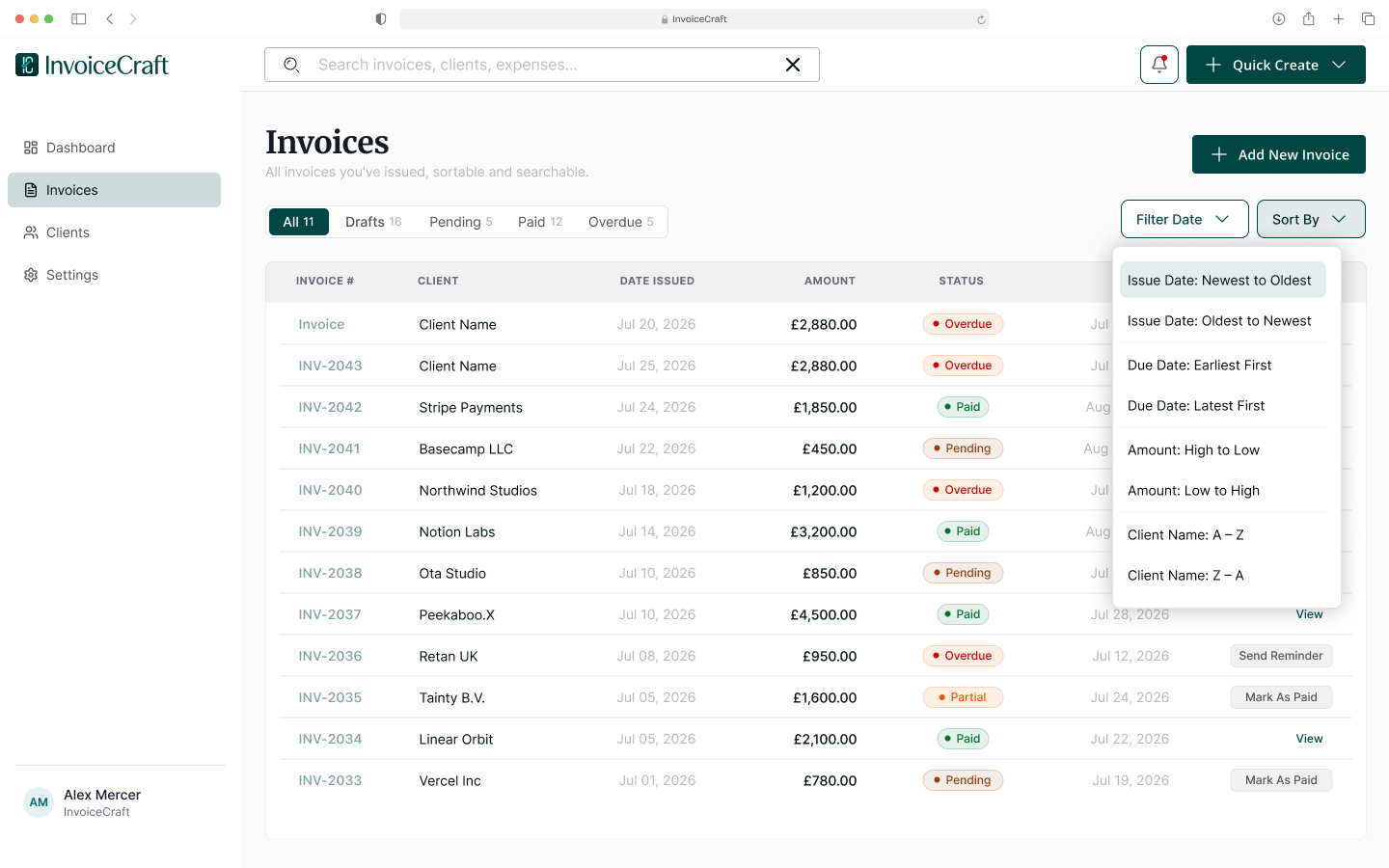
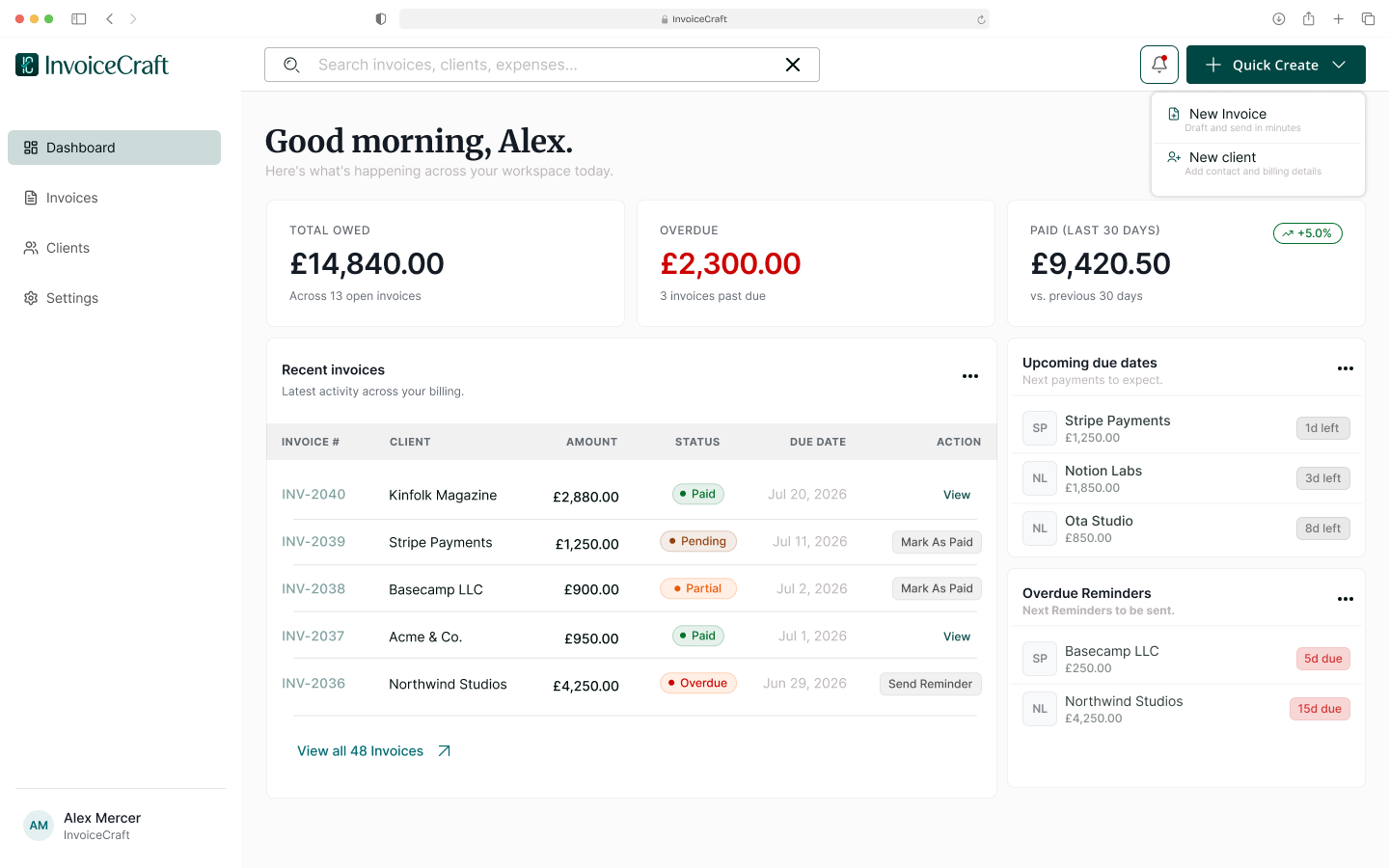
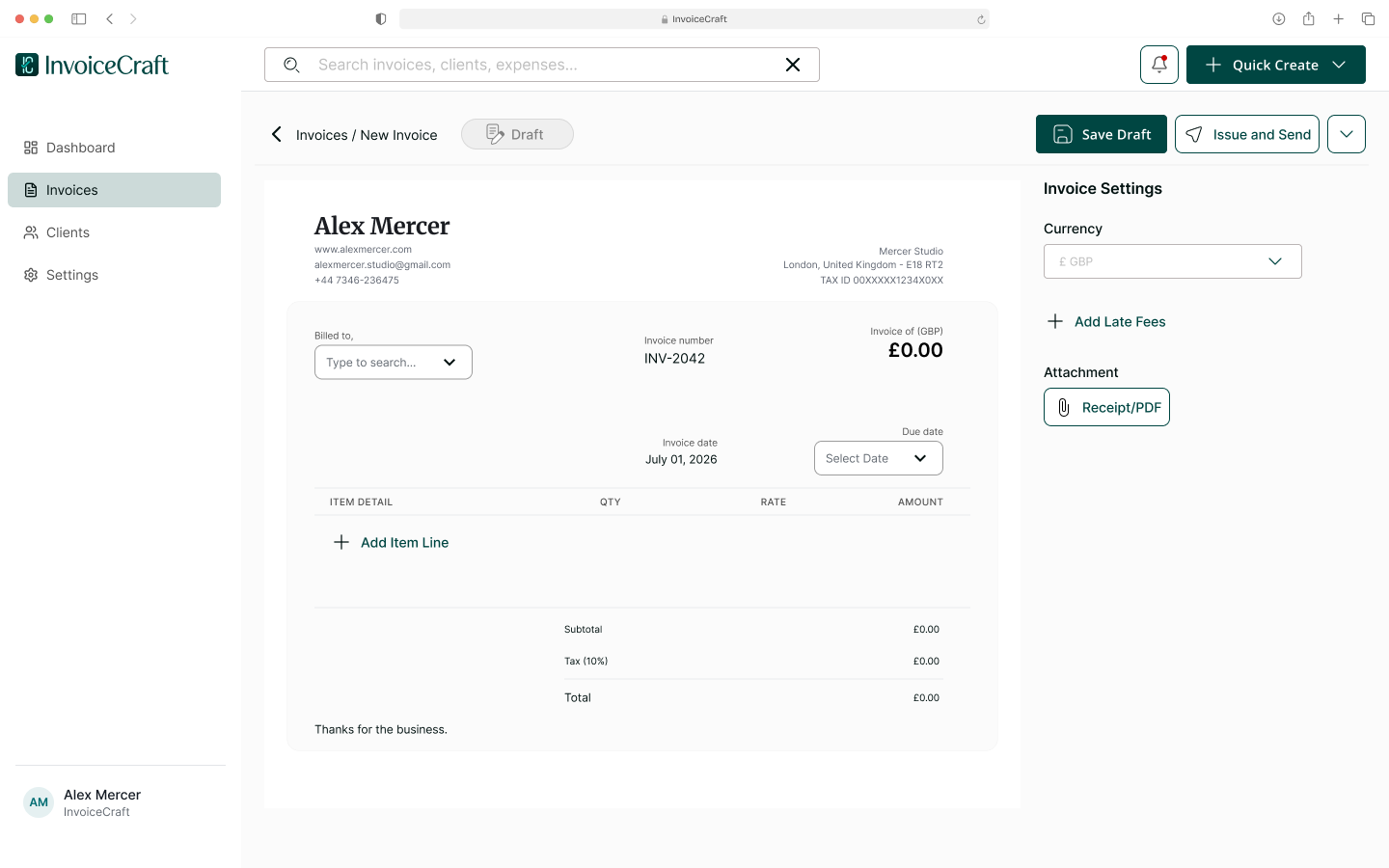
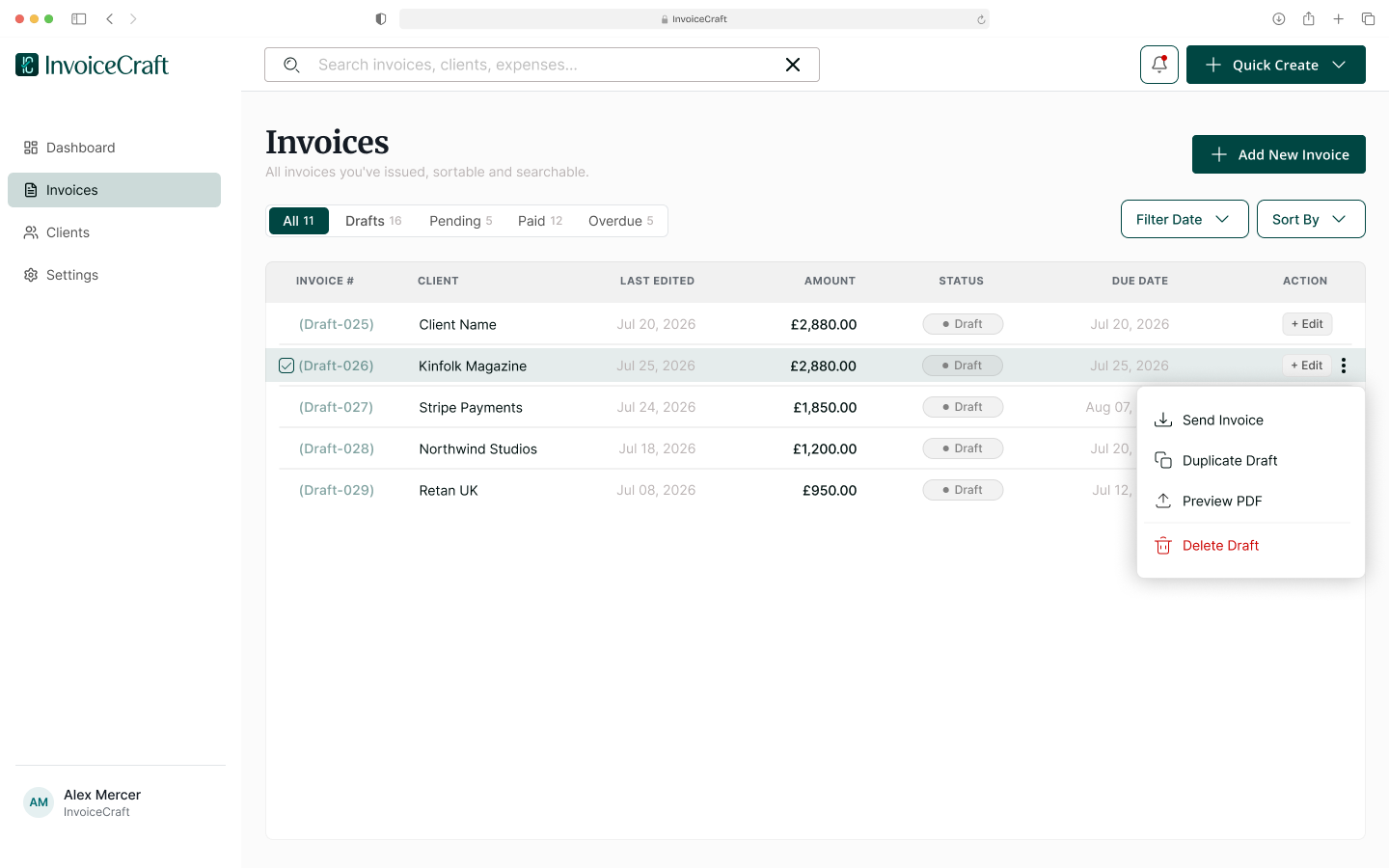
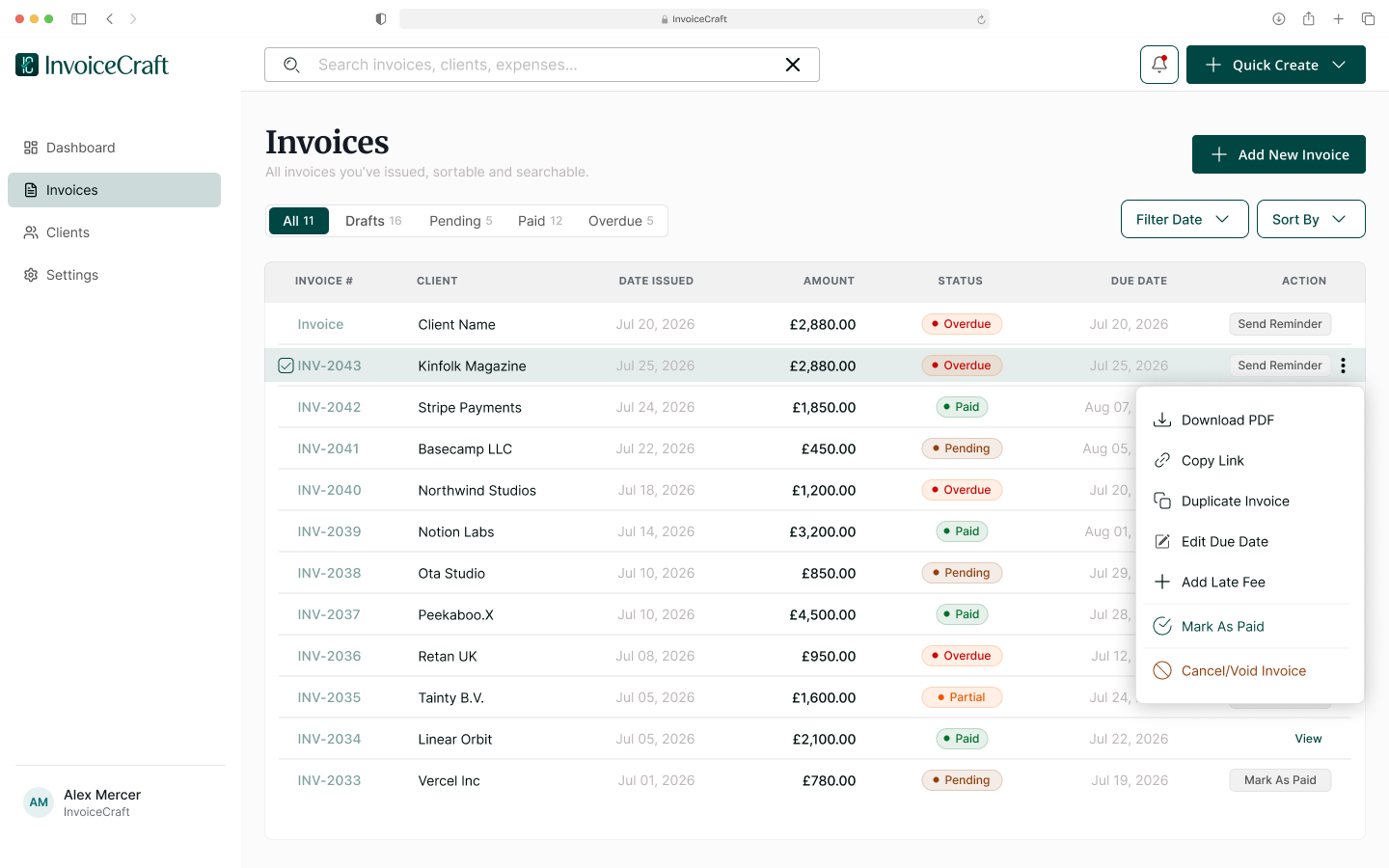
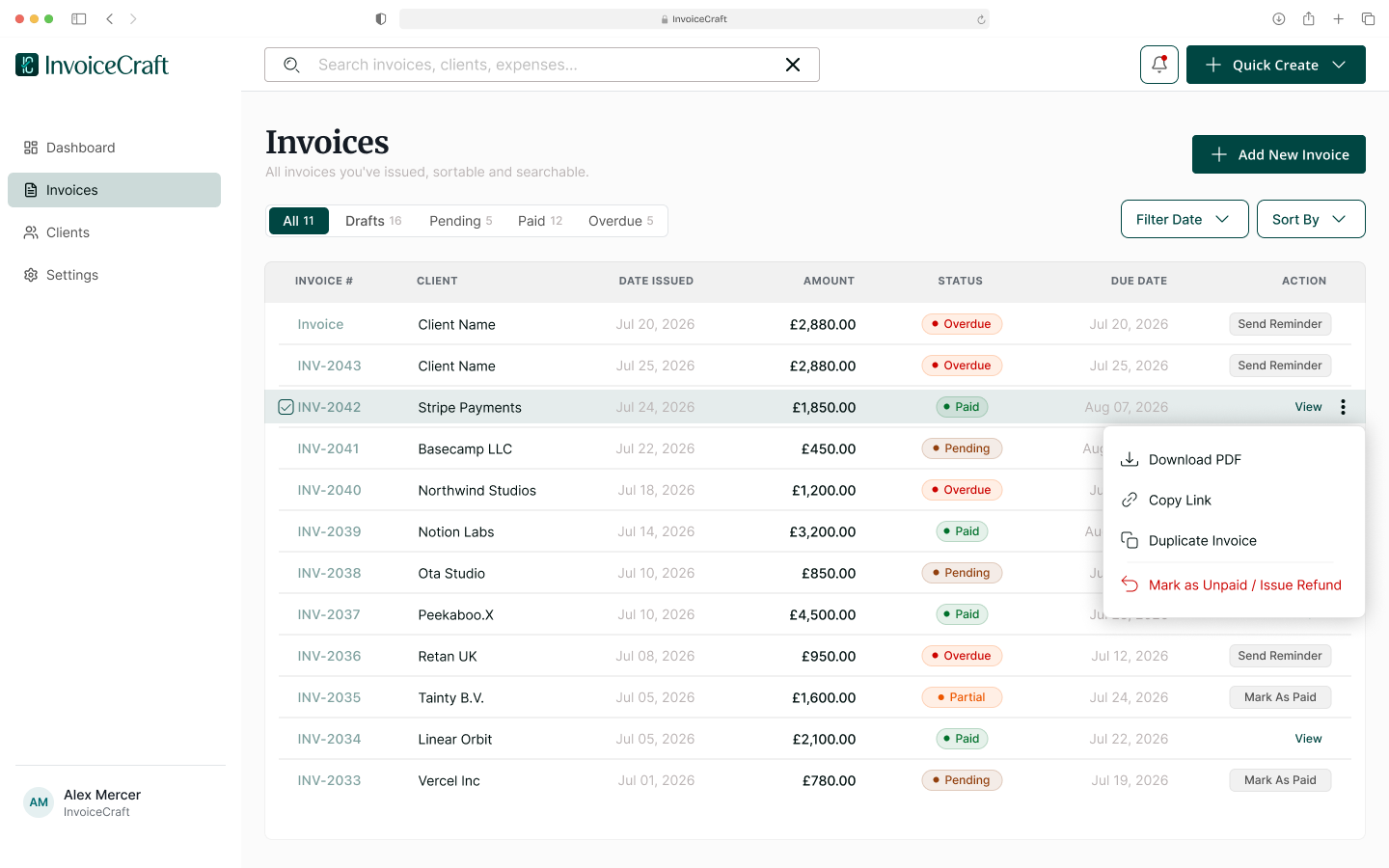
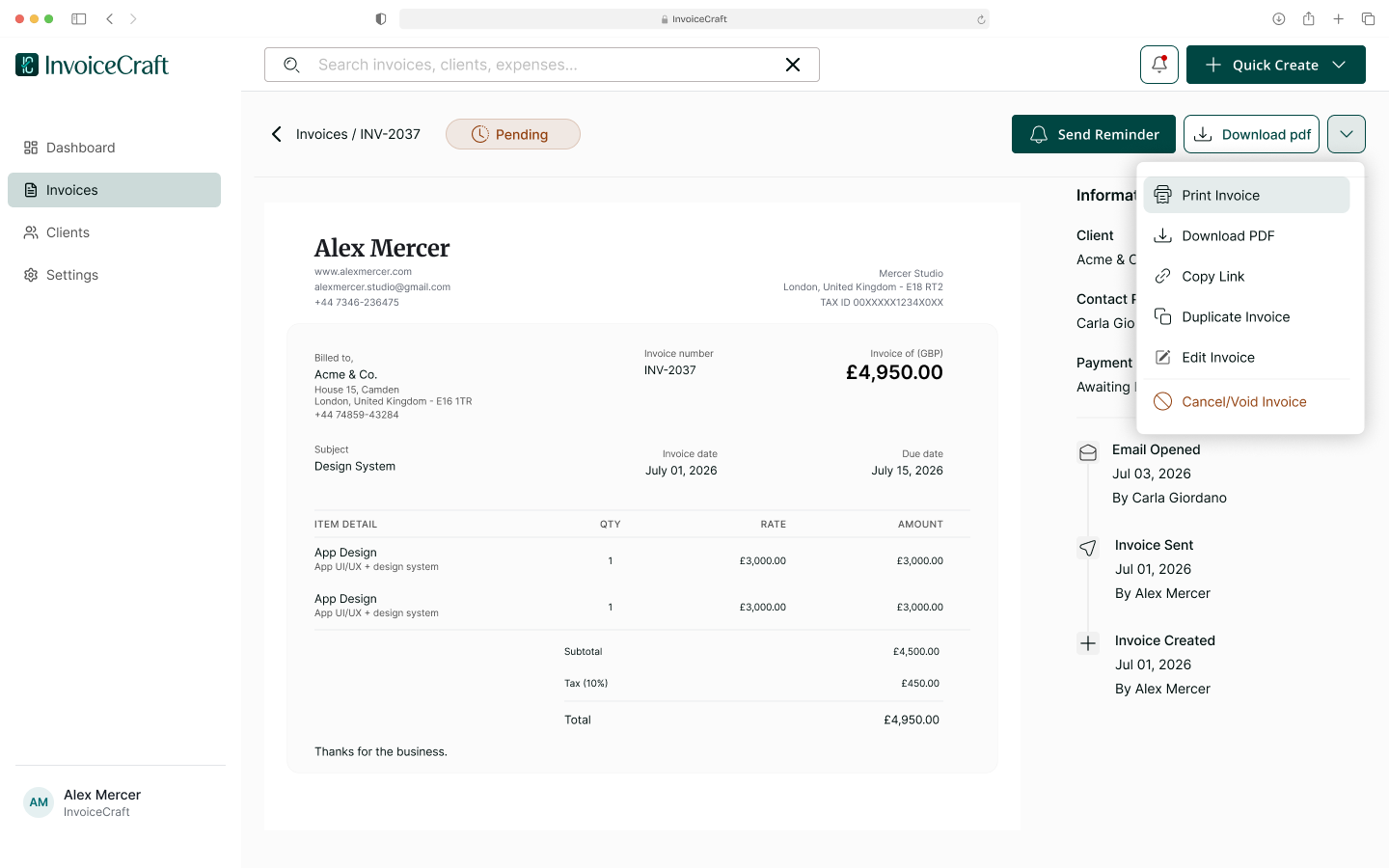
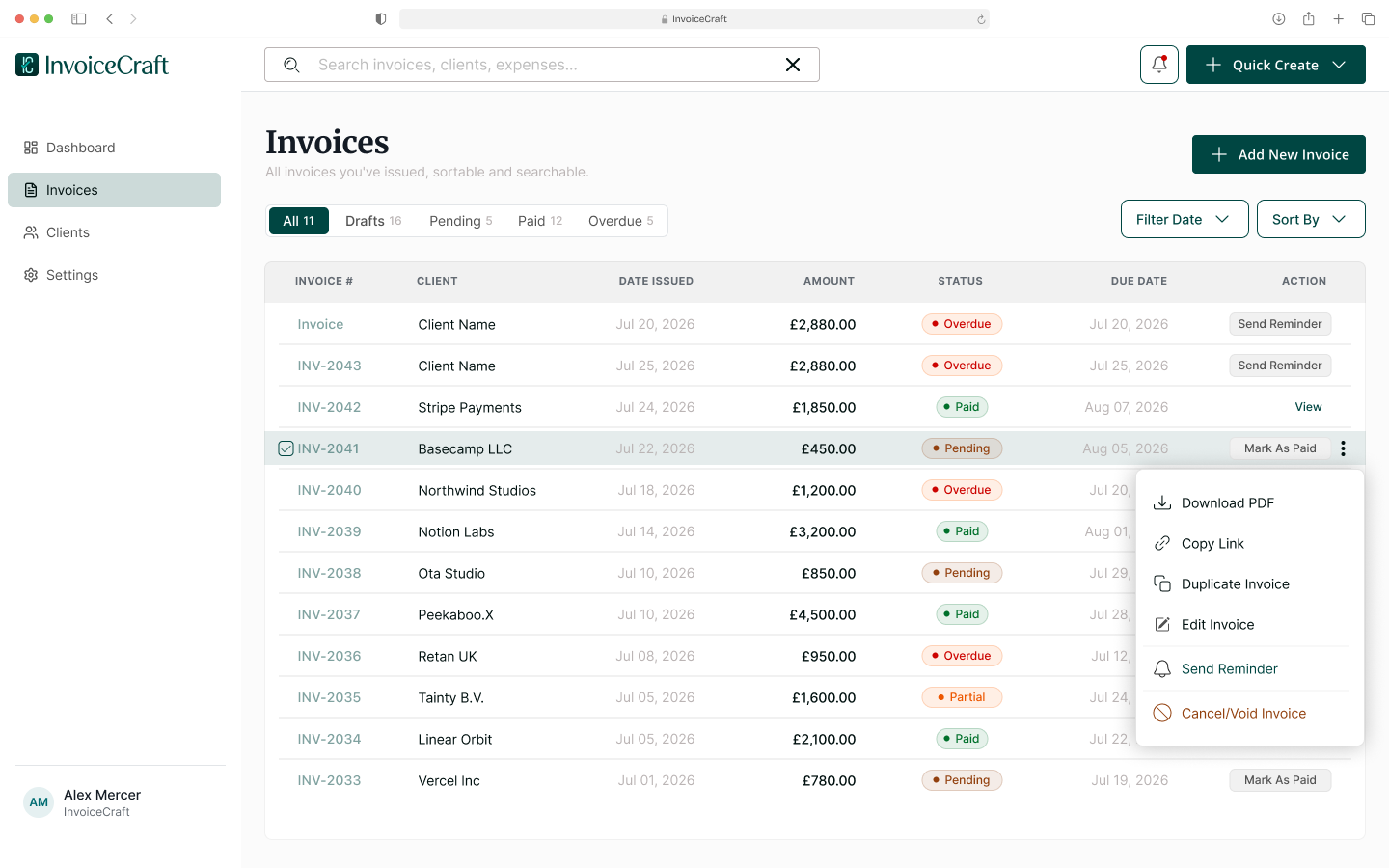
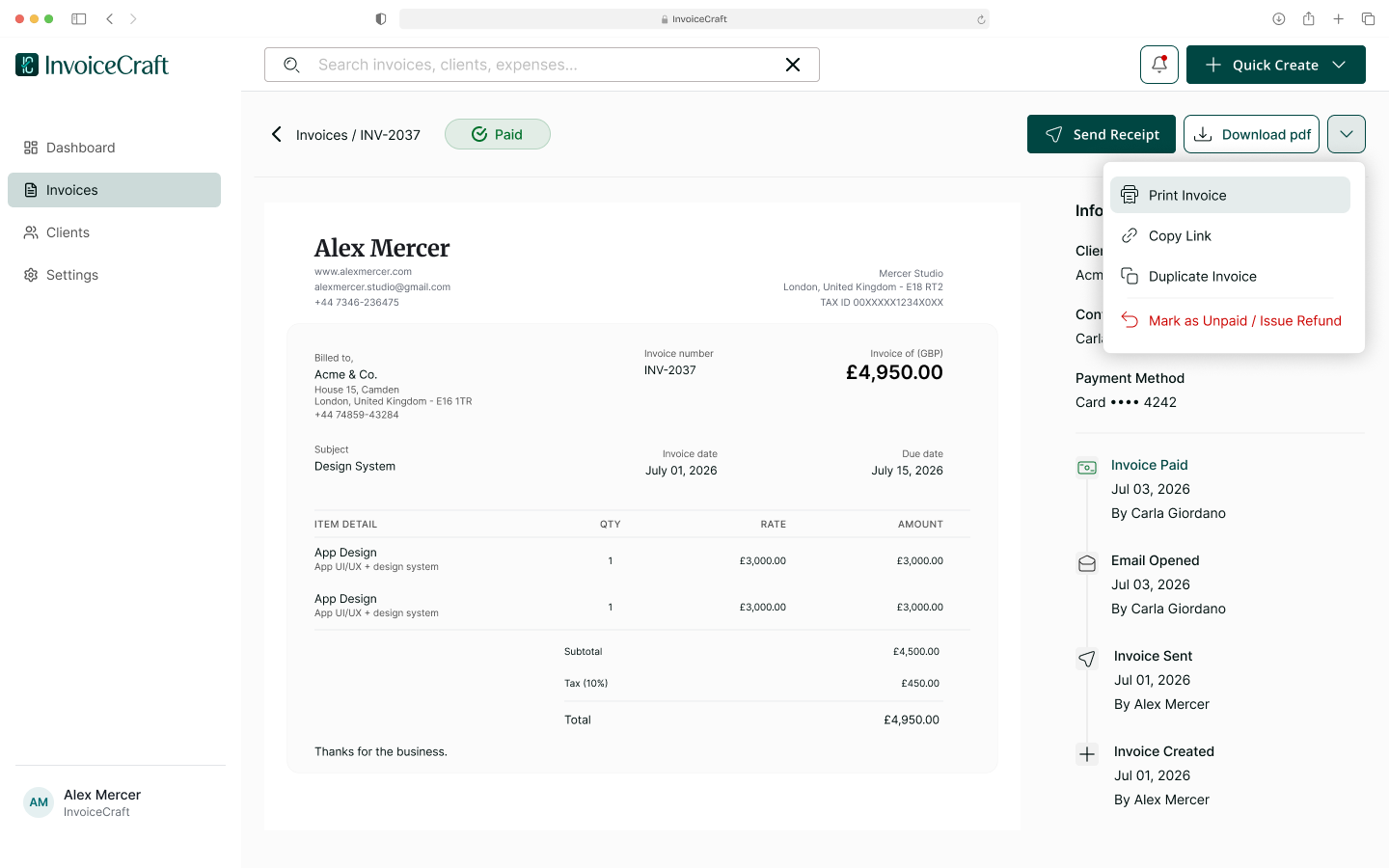
Actions are contextual to state - a Draft, a Pending, a Paid, and an Overdue invoice each offer only what's relevant. Status-filtered views carry live counts; an activity timeline gives an audit trail. This is the same state-and-permission modelling that underpins a payments or transactions surface.
GETTING PAID
Chasing payment, without the awkward emails.
A four-step reminder cadence with three selectable tones- Friendly, Standard, Firm and AI-assisted rewriting, so the freelancer sets the relationship they want with each client instead of writing the same uncomfortable email again.


CHECKOUT
The payer's 30 seconds matter most.
The person paying isn't the user and they decide in seconds. Mobile-first, Apple/Google Pay prioritised, line items collapsible, security signalled at the point of doubt. Reducing friction and building trust at the money-moment is the fintech problem in miniature.


VALIDATION
How I'll know it works.
As a launching venture, I instrumented three metrics rather than claim outcomes I don't yet have: time-to-first-invoice (can a new user bill someone in minutes?), share of invoices paid on or before the due date (did the cadence change behaviour?), and reminder open-through-to-payment rate (does the chase actually convert?). (Early informal testing in progress, real figures to follow.)
REFLECTIONS
Where AI ends and judgment begins.
AI compressed the timeline; it didn't make the decisions. Knowing where to move fast (exploration, boilerplate components) and where to slow down and craft (the status model, the reminder tones, the payer's checkout) is the work and it's the judgment that transfers to any 0→1 fintech or AI product, whatever the domain.